Choosing a video camera used to be mostly about budget.
Today, it’s much more about workflow.
A YouTube creator working alone needs something very different from a documentary filmmaker chasing a story through unpredictable conditions. A podcast studio has different priorities than an event filmmaker. And someone producing short films may care far more about codecs, dynamic range, rigging and colour than they do about portability.
That’s why “best camera under $3,000” lists only tell part of the story.
A better question is:
What kind of stories are you trying to tell?
Here are some of the best video cameras and filmmaking tools for different types of creators in 2026.
Best for YouTube & Solo Creators
Sony FX3
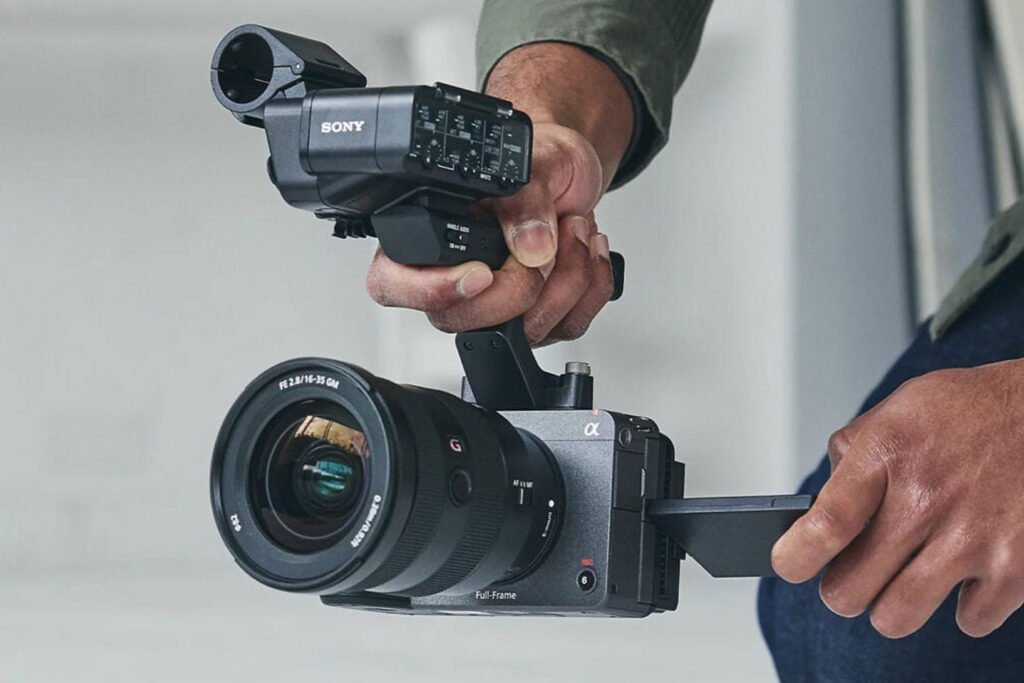
The Sony FX3 continues to be one of the easiest cinema cameras to recommend for a creator working alone.
It’s compact enough to use on a gimbal, small rig or handheld setup, but still gives you the advantages of a full-frame Cinema Line camera. Sony’s autofocus and subject tracking are major advantages when you’re both the person behind and in front of the camera, while strong low-light performance makes it much easier to work in imperfect locations.
The FX3 also has active cooling for longer recording sessions, 4K recording up to 120p and an XLR handle that turns a very small body into a much more serious production tool.
That ability to scale is probably its biggest strength.
You can throw a small lens on it and film yourself travelling one day, then add a cage, monitor, wireless audio, matte box and cinema lens for a commercial shoot the next.
Henry’s has already looked at why the FX3 works so well in real-world filmmaking, particularly for creators who need cinematic quality without a traditional cinema-camera footprint.
Best for:
YouTube creators, branded content, travel filmmaking, small production teams and solo operators.
Sony FX5 vs FX3: When Should You Step Up?
The new Sony FX5 takes the same compact cinema philosophy and pushes it much further into professional production.
This isn’t simply an FX3 with more buttons.
The FX5 uses a full-frame Exmor RS sensor with approximately 16.6 effective megapixels, offers 15+ stops of latitude in S-Log3 and adds support for Sony’s X-OCN recording workflow. Sony has also added professional 32-bit float audio options and more traditional cinema-camera connectivity and controls.
The FX3 still makes more sense when portability is the priority.
The FX5 starts making sense when the camera becomes the centre of a larger production system.
Think documentary crews, commercial productions, larger interview setups and projects where audio, monitoring, codecs and connections matter just as much as image quality.
FX3 vs FX5
| Sony FX3 | Sony FX5 | |
|---|---|---|
| Best Use | Solo creator and compact cinema rig | Professional production and documentary work |
| Body Style | Very compact | Compact cinema body |
| 4K Slow Motion | Up to 120p | Professional high-frame-rate workflows |
| Dynamic Range | Excellent | 15+ stops claimed in S-Log3 |
| Audio | XLR handle available | Advanced 4-channel options including 32-bit float |
| RAW / Cinema Workflow | External RAW options | X-OCN support |
| Rigging | Excellent | Designed around larger production systems |
| Main Advantage | Size and simplicity | Workflow and production capability |
Best for Documentary Film making
Nikon ZR
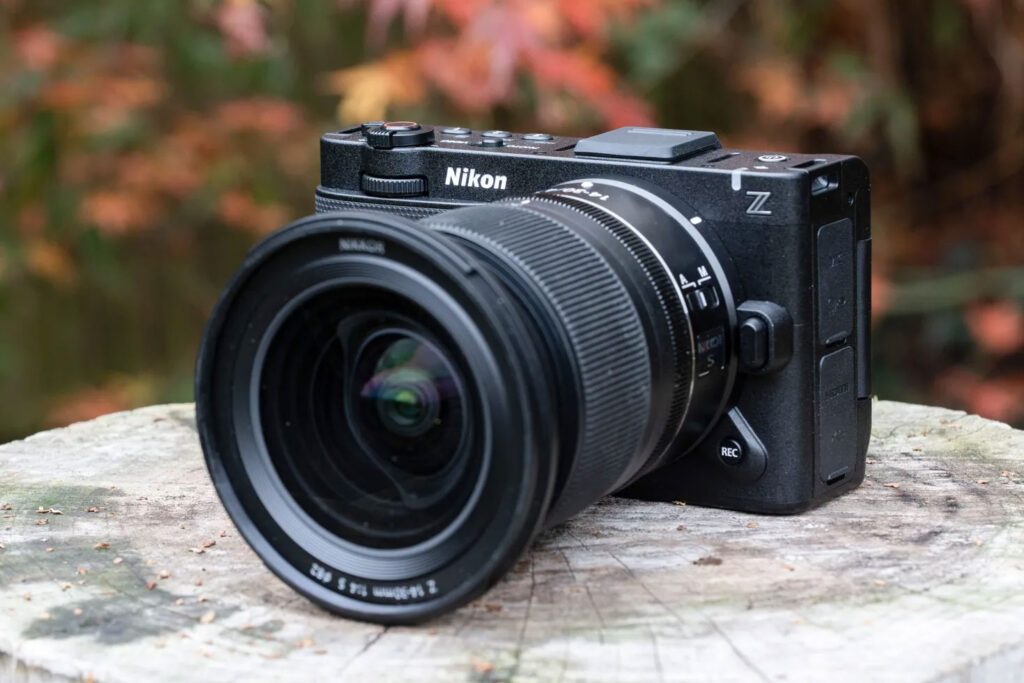
The Nikon ZR might be one of the most important video cameras Nikon has released.
It is the first camera in Nikon’s Z Cinema series following its acquisition of RED, and that relationship becomes obvious when you look at what the ZR can record.
The full-frame ZR offers internal R3D NE RAW recording, up to 6K/60p and more than 15 stops of claimed dynamic range, bringing RED-inspired colour science and RAW workflows into a significantly smaller and more approachable camera.
That makes it especially interesting for documentary filmmakers.
You get Nikon autofocus and Z-mount lens flexibility, but you also get files designed for much heavier colour work in post.
It’s a camera that can work relatively stripped down for run-and-gun shooting and then be built into a proper production rig when needed.
At around the $3,000 CAD body-only level at Henry’s, it also creates an interesting entry point into dedicated cinema cameras.
Best for:
Documentary filmmakers, emerging cinematographers, commercial creators and anyone who wants a serious RAW workflow without moving immediately into a much larger cinema body.
Best for Travel Storytelling
Panasonic LUMIX S5IIX
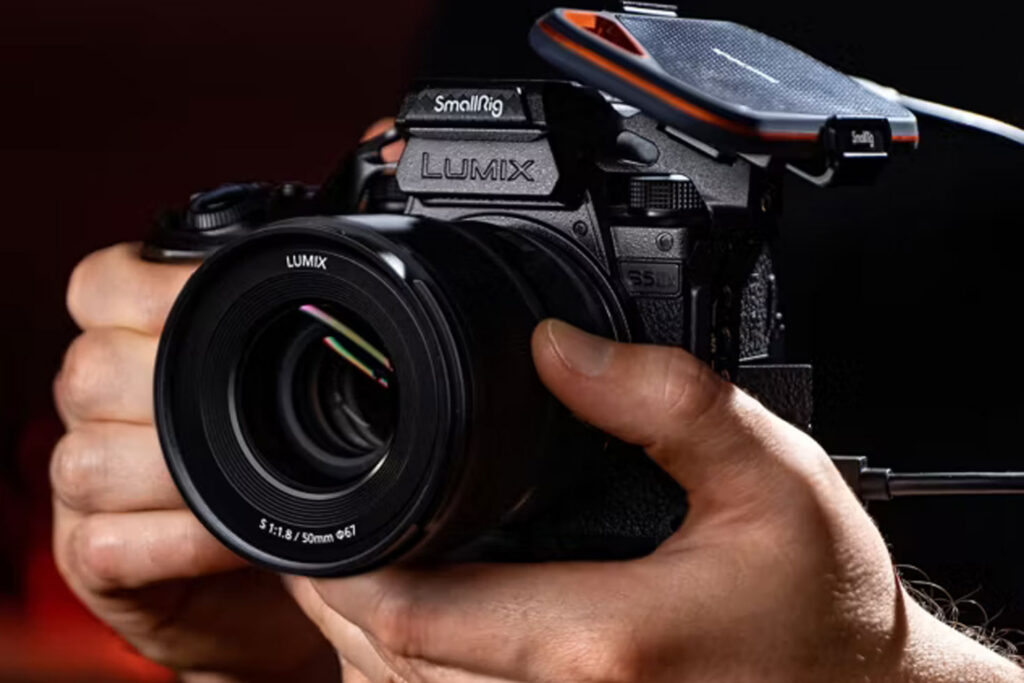
Travel filmmaking has a strange set of requirements.
You want great image quality, but you don’t want to carry a huge camera.
You want stabilization because you’re often shooting handheld.
You need reliable autofocus.
And when you finally get back to your hotel or editing suite, you want footage that gives you enough latitude to actually work with.
That’s where the Panasonic S5IIX remains such a strong option.
It combines a 24MP full-frame sensor with phase-detection autofocus and excellent Active I.S., but its real appeal for filmmakers is the recording flexibility.
The S5IIX can shoot internal 6K 10-bit video, 4K 60p, ALL-Intra recording and Apple ProRes to an external SSD. It also supports ProRes RAW and Blackmagic RAW workflows through compatible external recorders. Panasonic rates V-Log/V-Gamut at more than 14 stops of dynamic range.
For travel creators, recording ProRes directly to an SSD can be especially useful when you’re shooting a lot of footage and want to move quickly into editing.
Best for:
Travel filmmakers, destination content, adventure video and hybrid shooters who want strong stabilization and professional codecs without jumping into a dedicated cinema body.
Best for Interviews & Podcasts
For interviews, the camera is only one part of the equation.
This is where I’d start thinking about the entire system.
Canon Cinema EOS
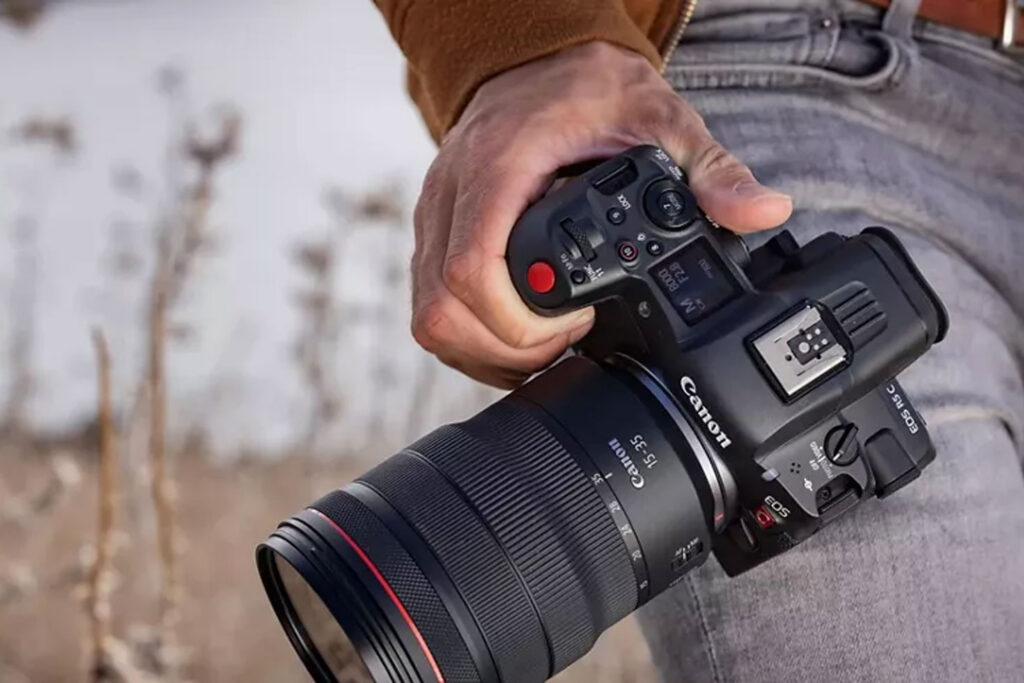
Canon’s Cinema EOS lineup makes a lot of sense for controlled productions because of the way the cameras integrate video-specific tools into the body.
The Canon EOS R5 C remains particularly interesting for smaller studios because it combines a 45MP stills camera with Canon’s Cinema EOS interface and 8K video capability.
Move farther into Canon’s cinema lineup and cameras such as the C50 and C80 give you bodies that are increasingly designed around dedicated video production rather than hybrid use. Henry’s current cinema-camera selection includes the R5 C, C50 and other Cinema EOS options alongside Sony, Nikon and Panasonic systems.
For interviews, corporate video and podcast studios, that’s valuable because the camera is usually being built into a permanent or semi-permanent system.
Sony Cinema Line
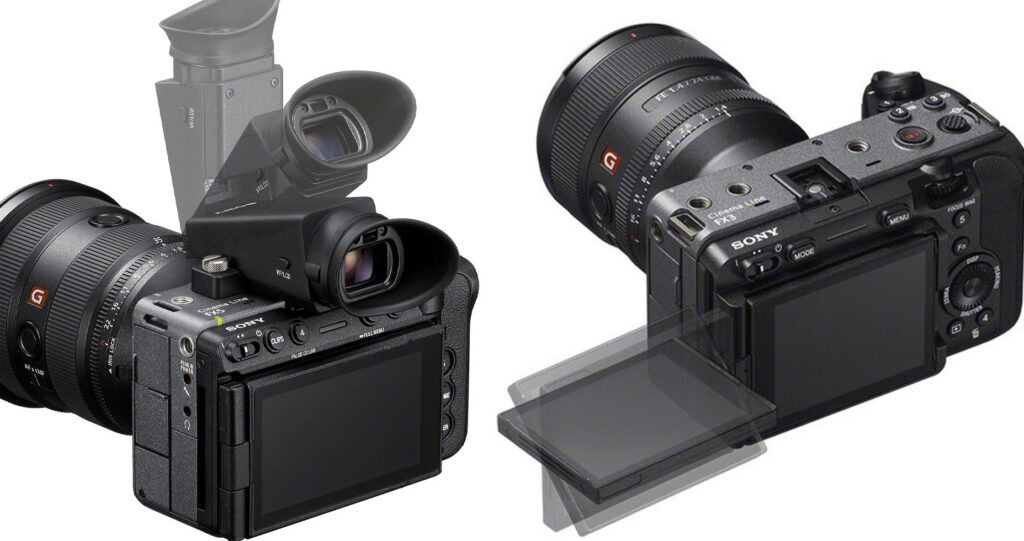
Sony takes a slightly different approach.
An FX3 can start as a tiny camera and gradually become a fully rigged interview camera. Move into the FX5 and you’re getting closer to a traditional cinema workflow without giving up Sony’s excellent autofocus and E-mount lens ecosystem.
If you’re trying to choose between Canon and Sony, don’t only compare camera bodies.
Look at the entire kit:
Your existing lenses
The lenses you plan to buy
Audio integration
How many cameras you eventually want
Colour matching between cameras
Battery ecosystem
Rigging accessories
What other shooters on your team already use
Once you start building two-camera and three-camera interview setups, staying within one ecosystem can make your life considerably easier.
Best for Event Film making
Event filmmakers need reliability more than almost anything else.
You may be recording for hours.
Lighting changes constantly.
People don’t repeat moments because your autofocus missed.
And if you’re covering a wedding, live event or conference, you frequently have one chance to capture something properly.
The Sony FX3 remains excellent here because of its autofocus, cooling and low-light performance.
The Panasonic S5IIX is another strong choice thanks to its stabilization and recording flexibility.
For more demanding commercial event work, the FX5 begins to make a lot of sense because of its stronger audio workflow, connectivity and cinema-oriented recording formats.
The important thing with event cameras isn’t just buying the body.
Build for redundancy.
Two cameras.
Two audio sources.
Extra batteries.
More media than you think you’ll need.
Because there are no reshoots when the first dance is over.
Best for Short Films
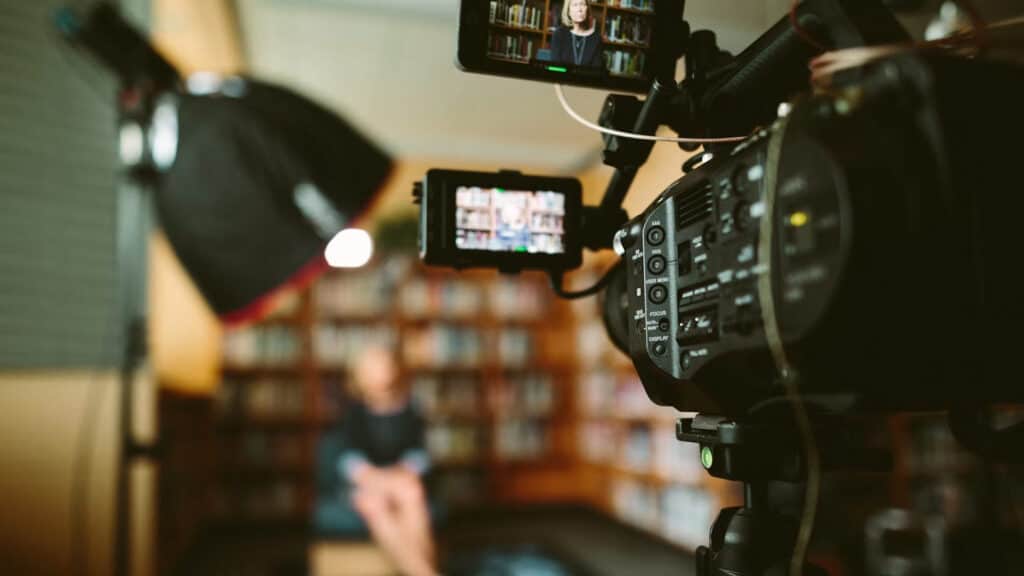
If short films are the goal, this is where I’d start looking seriously at cameras in roughly the $2,800+ category.
Not because spending more automatically makes your film more cinematic.
It doesn’t.
But once you reach this level, you begin getting tools that dramatically improve production and post-production workflows.
The Nikon ZR gives you 6K RAW and RED-inspired colour science.
The Panasonic S5IIX gives you internal 6K and ProRes plus external RAW workflows.
The Sony FX3 gives you a proven compact cinema body with excellent autofocus and strong low-light performance.
Canon’s R5 C combines 8K cinema recording with a high-resolution stills body.
And the new Sony FX5 moves even farther into professional cinema workflows with 15+ stops of latitude, X-OCN and expanded audio options.
The right choice depends less on which one has the biggest number on the box and more on how you plan to work.
The Camera Is Only the Beginning
This is the part filmmakers often learn after buying their first serious camera.
A great camera doesn’t automatically create a great production.
Once your image quality reaches this level, lighting, audio, support and rigging can make a bigger difference than moving from one camera body to another.
Invest in Lighting

If you’re filming interviews, short films, products or branded content, lighting should be near the top of your list.
Aputure, Amaran and Godox have made professional LED lighting considerably more accessible.
Something like the amaran Halo lineup gives creators options ranging from smaller fixtures through much more powerful studio lights, while Aputure’s broader ecosystem lets you build increasingly sophisticated setups as your productions grow. Henry’s currently carries options such as the amaran Halo 200x as well as multi-light Aputure/amaran kits.
More important than the light itself is learning how to shape it.
A large soft source placed correctly can make a $3,000 camera look exceptional.
Bad lighting can make a $10,000 camera look cheap.
Light Stands vs C-Stands
Don’t treat stands as an afterthought.
A traditional light stand is perfect for many straightforward setups and is generally lighter and easier to transport.
A C-stand becomes valuable when you start needing more precise positioning for lights, flags, diffusion, reflectors and boom arms.
And whichever you use, sandbag it.
Henry’s has been saying that for years because a heavy light falling onto your subject or camera is a very expensive way to learn about grip equipment.
32-Bit Float Audio Is Changing How Creators Record
Audio has quietly gone through its own major technological leap.
32-bit float recording gives you an enormous amount of dynamic range and makes it significantly harder to permanently ruin a recording because the input gain was set incorrectly.
That doesn’t mean you can ignore microphone placement or stop monitoring audio.
But it does give filmmakers a much larger safety net.
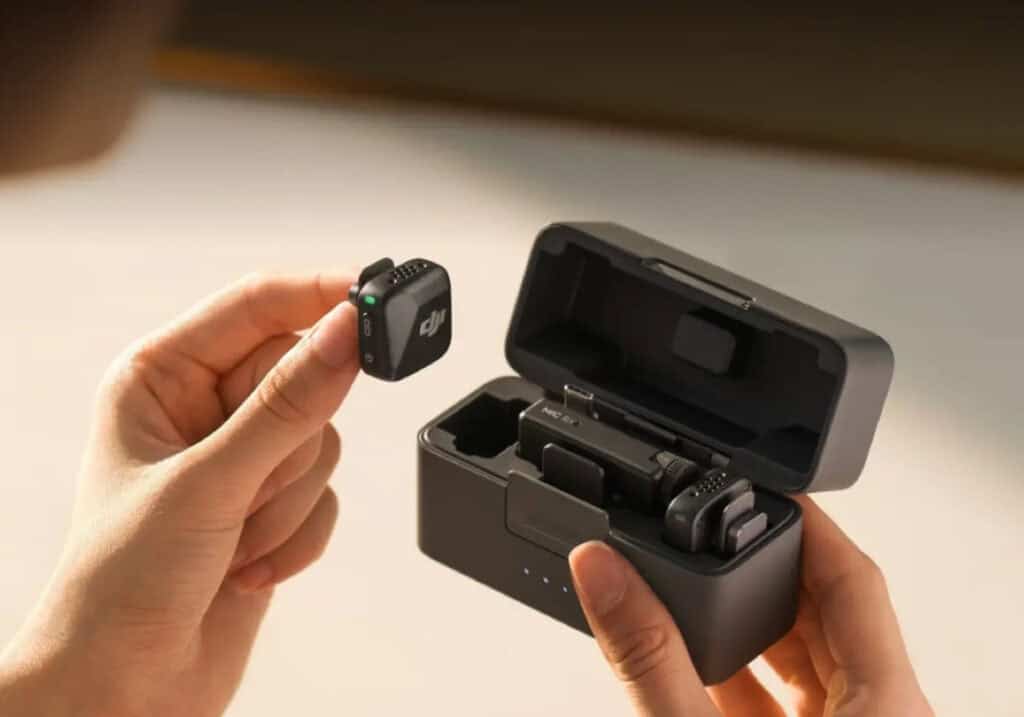
Portable recorders such as the Zoom F3 and H4essential offer 32-bit float recording, while newer camera and wireless audio systems are increasingly incorporating similar workflows. Henry’s currently carries both recorders along with wireless systems such as the DJI Mic 3 and RØDE Wireless Pro.
For interviews, documentaries and unpredictable live situations, that’s a big deal.
Add a Cage Before You Think You Need One
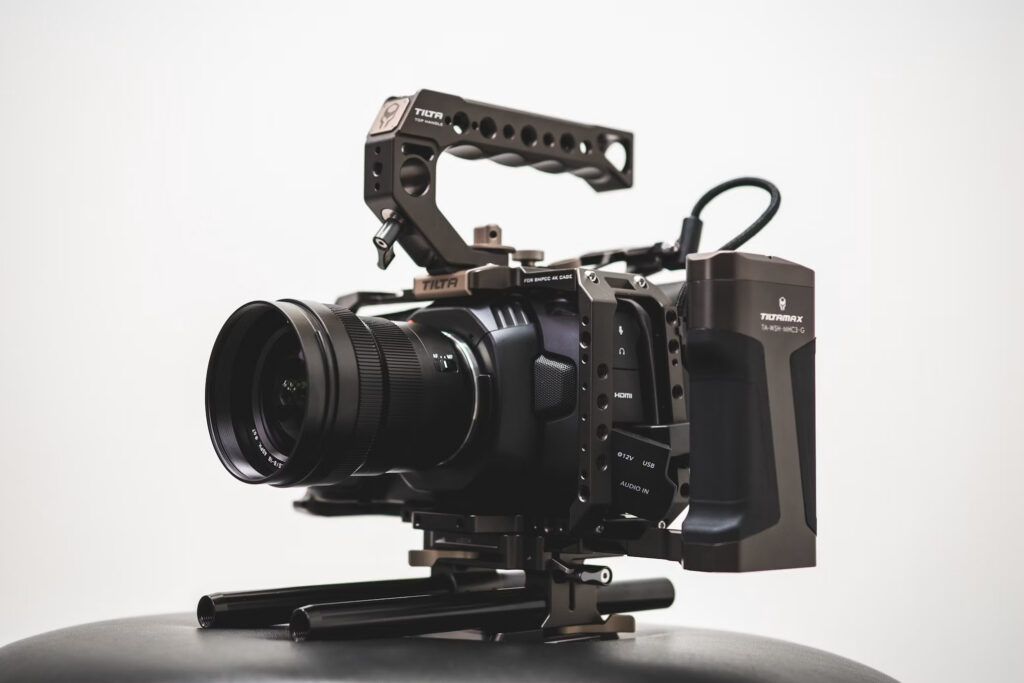
A cage doesn’t improve your image quality.
What it does is turn your camera into a system.
Once you start adding:
A monitor
Wireless video
Audio receiver
Top handle
Side handle
SSD
External battery
Follow focus
Matte box
Suddenly those mounting points become extremely valuable.
Brands such as SmallRig and Tilta have made it much easier to build modular camera rigs around compact cinema and mirrorless bodies.
The trick is not to bolt everything onto your camera because you can.
Start with the bare camera.
Then add accessories when your workflow tells you that you need them.
So, Which Video Camera Should You Buy?
Here’s the short version:
| Type of Creator | Camera to Consider | Why |
|---|---|---|
| YouTube & Solo Creator | Sony FX3 | Compact, autofocus, low light, easy to rig |
| Documentary | Nikon ZR / Sony FX5 | RAW workflows, dynamic range, professional production tools |
| Travel Storytelling | Panasonic S5IIX | Stabilization, 6K, ProRes, compact full frame |
| Interviews & Podcasts | Canon Cinema EOS / Sony FX Line | Audio, rigging and multi-camera ecosystem |
| Event Filmmaking | Sony FX3 / FX5 | Autofocus, low light and reliability |
| Short Films | Nikon ZR / FX3 / S5IIX / R5 C / FX5 | Serious codecs and post-production flexibility |
Build Around the Story
There isn’t one best video camera anymore.
And that’s a good thing.
A solo creator doesn’t need the same tool as a documentary crew.
A documentary shooter doesn’t need the same camera as a podcast studio.
And a filmmaker shooting a short film might happily trade portability for RAW recording, rigging and better production connectivity.
Start with the story you want to tell.
Then build the camera system around it.
And remember that once you’ve chosen the camera, some of the smartest upgrades may not be another lens or a more expensive body.
Better lighting.
Better audio.
Better support.
Better rigging.
Those are the tools that turn a camera into a filmmaking kit.
Discover More Videography
- Back to School 2026: The Photography & Video Gear Students Actually Need
- Street Never Sleeps: Mastering Street Photography & Videography in 2026
- Mastering Light with GODOX: Your Guide to Better Photography and Video
- 5 Tips for Success as a Content Creator: Photography & Videography

Canada’s Greatest Camera Store
Henry’s has long been known in the Canadian photographic industry as the source for the best and newest products, informed Imaging Experts, award-winning customer service and competitive pricing. Henry’s, competitive pricing since 1909 and has evolved into Canada’s largest independent photographic and digital retailer.