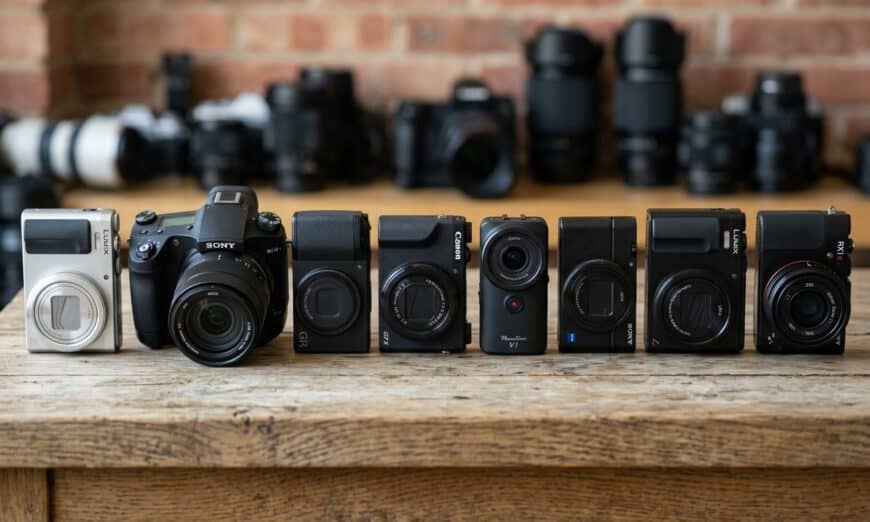
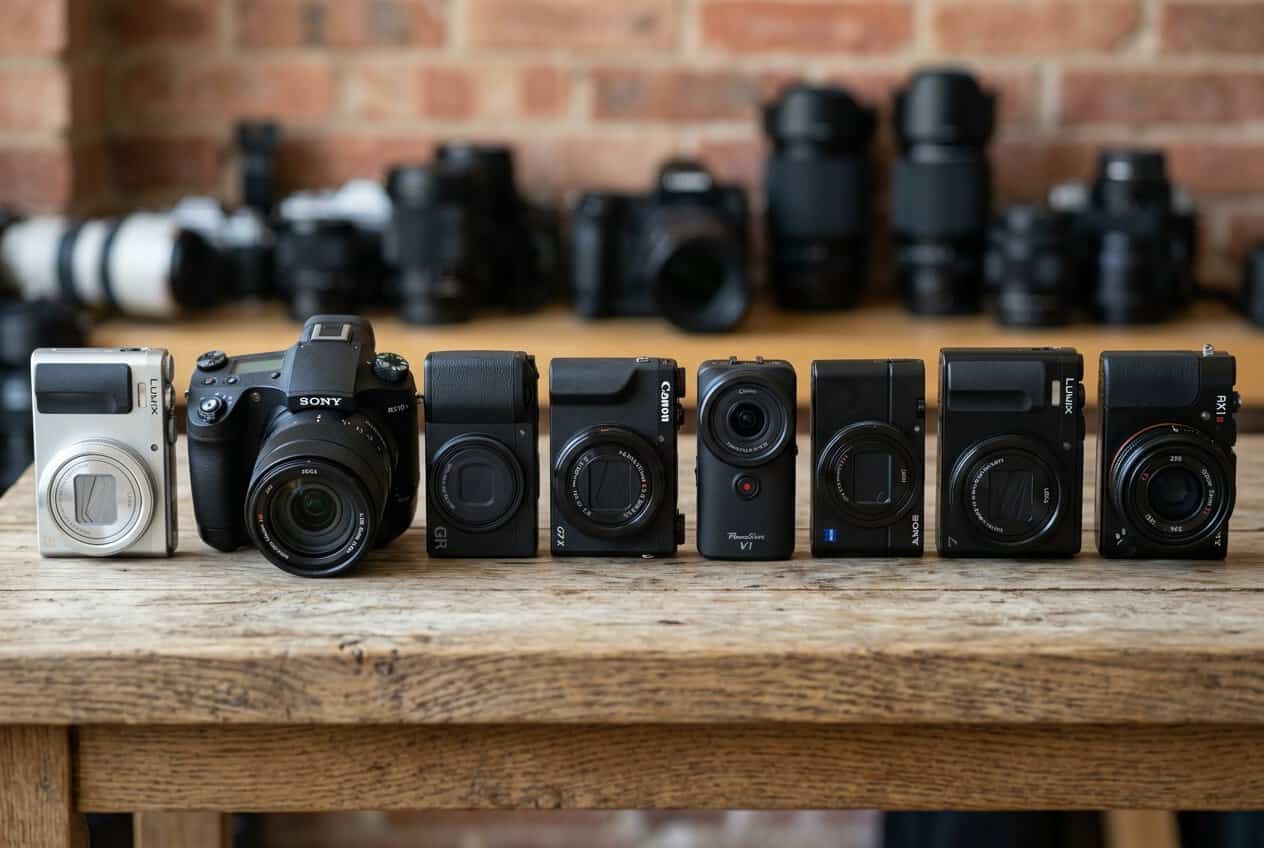
For a while, it looked like smartphones might completely replace the point-and-shoot camera.
Then something interesting happened.
People started wanting cameras again.
Not necessarily big mirrorless systems with multiple lenses, batteries and a backpack full of accessories. They wanted something smaller. Something fun. Something they could throw into a jacket pocket or travel bag and actually enjoy using.
Compact cameras have come roaring back, and the category in 2026 is more interesting than it has been in years.
Some offer huge optical zoom ranges your smartphone simply can’t match. Others squeeze APS-C or even full-frame image quality into tiny fixed-lens bodies. And cameras like the Canon PowerShot G7 X Mark III have found an entirely new audience years after they originally launched.
So if you’ve been thinking about putting down the phone and picking up a real camera again, here are some of the compact cameras worth knowing about right now.
Panasonic LUMIX ZS300: The New Travel Camera to Watch
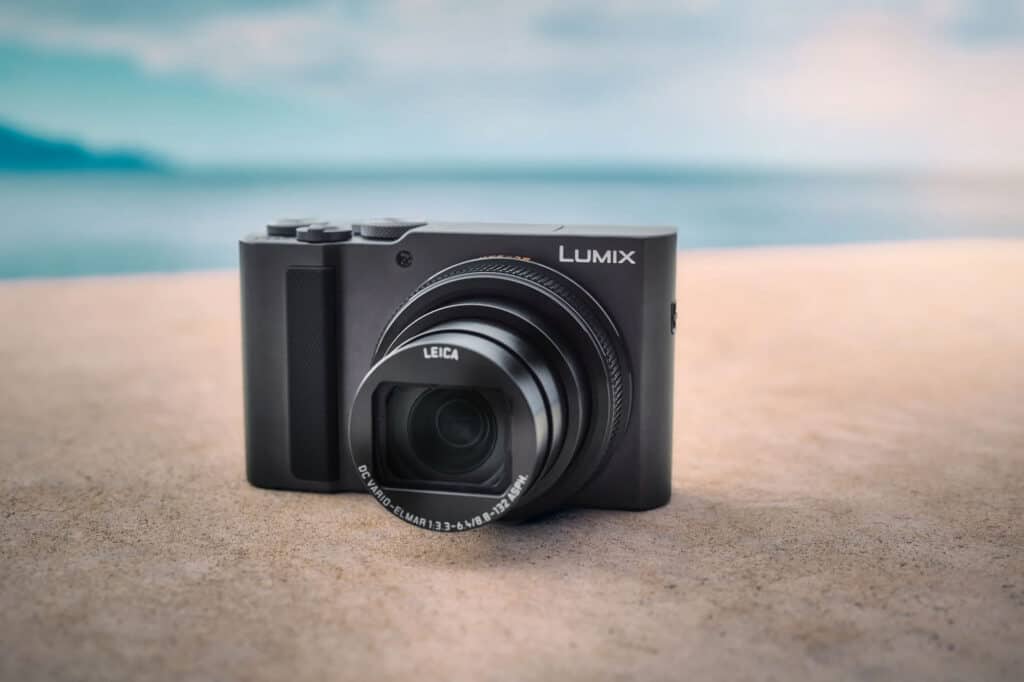
One of the more interesting new compact cameras for 2026 is the Panasonic LUMIX ZS300.
Panasonic has taken the classic travel-zoom idea and given it a significant image-quality upgrade with a 1-inch 20.1MP sensor paired with a 24-360mm equivalent LEICA lens. That 15x optical zoom gives you a useful wide angle for landscapes, cities and family photos while still reaching far enough for distant landmarks, wildlife or details you simply couldn’t capture with a phone.
It also shoots RAW, offers 4K video and includes a built-in flash, all in a body weighing just 337g.
The important part isn’t necessarily the specification sheet, though.
It’s versatility.
When you’re travelling, changing lenses isn’t always something you want to do. The ZS300 gives you one camera that can photograph the view from your hotel balcony, zoom in on something across a lake and then grab a family photo over dinner.
Who is it for?
Travellers who want considerably more zoom and photographic control than their smartphone without committing to an interchangeable-lens system.
Sony RX10 V: One Camera, 24-600mm
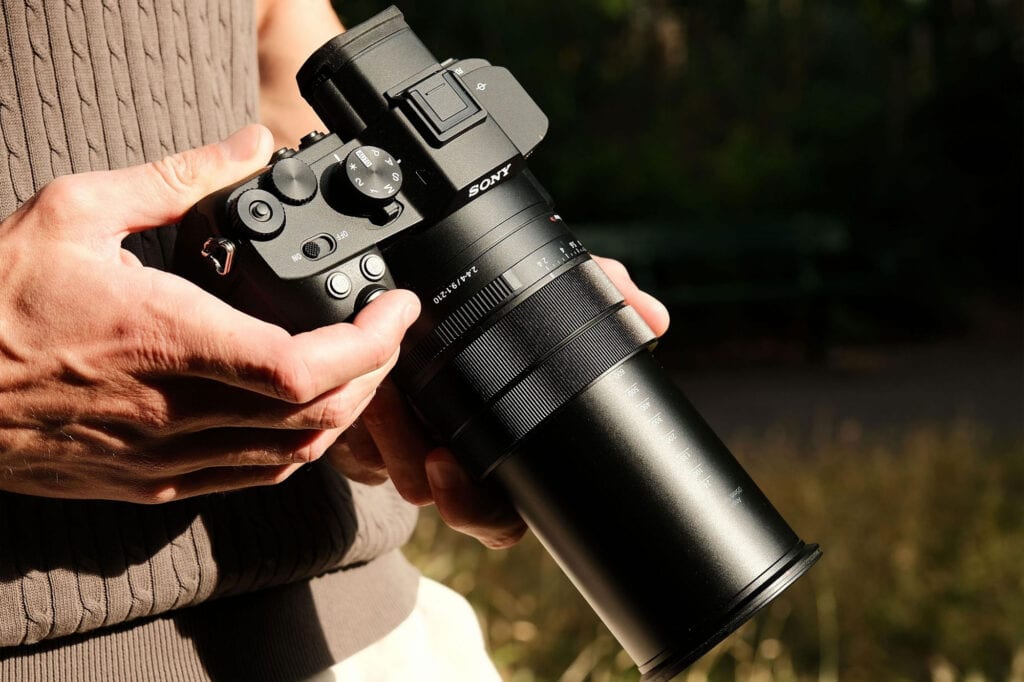
Calling the new Sony RX10 V a “point-and-shoot” might be stretching the traditional definition. It certainly isn’t pocket-sized.
But it absolutely belongs in the conversation about all-in-one cameras.
Sony introduced the fifth generation RX10 in July 2026, and its biggest appeal remains the same: an incredible 24-600mm equivalent ZEISS f/2.4-4 lens permanently attached to the camera.
That’s everything from landscapes to birds in one lens.
This generation adds technology that feels much closer to Sony’s latest Alpha cameras, including AI-powered subject recognition autofocus, up to 30fps continuous shooting and 4K video up to 120p. It uses a 20.1MP 1-inch stacked sensor and Sony’s NP-FZ100 battery, rated for roughly 630 shots.
For travelling, wildlife, school sports, cottage life or anyone who doesn’t want to carry several lenses, it’s incredibly appealing.
Who is it for?
The photographer who wants one camera to do almost everything and values zoom range more than pocketability.
Ricoh GR IV: The Photographer’s Pocket Camera
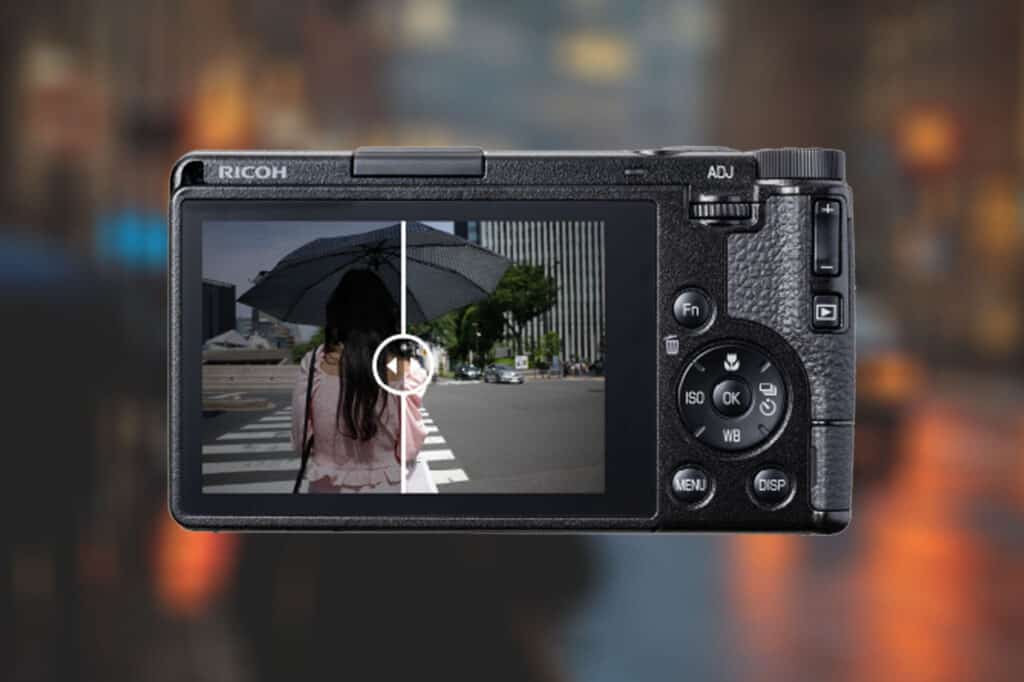
The Ricoh GR series has always taken a very different approach.
There’s no giant zoom.
There’s no interchangeable lens.
You get a fixed 28mm-equivalent f/2.8 lens, a large APS-C sensor and an extremely small camera.
And that’s exactly the appeal.
The GR IV uses a roughly 26MP APS-C sensor, 5-axis image stabilization and a newly developed 18.3mm f/2.8 lens while retaining the compact design that has made the GR series such a favourite among street photographers. It also starts up in around 0.6 seconds, meaning it really is designed to come out of your pocket and capture a moment quickly.
This isn’t the camera I’d recommend if you want to photograph a bear across a lake.
But for street photography, travel, everyday family moments and documenting life, it’s one of the most interesting cameras you can carry.
And Now There’s a GR IV Monochrome
Ricoh made things even more interesting in 2026 with the GR IV Monochrome.
Instead of simply converting a colour image to black and white, this version uses a monochrome-specific APS-C sensor without the traditional colour filter array. That allows each pixel to capture luminance information directly, producing sharper detail, richer tonal gradation and very high ISO capability. Ricoh also added a built-in red filter and dedicated monochrome image controls.
It’s definitely a niche camera.
But it’s a very cool niche.
Who is it for?
Street photographers, documentary photographers and enthusiasts who want a camera that encourages them to think about light, shadow and composition rather than zoom range.
Canon PowerShot G7 X Mark III: The Camera That Refuses to Go Away
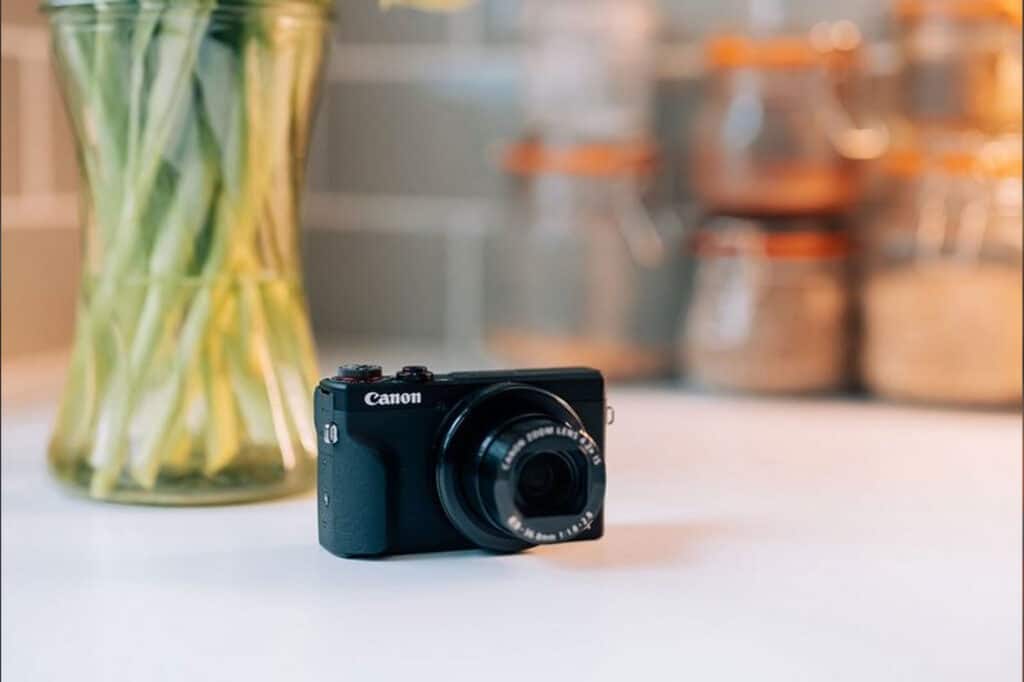
The G7 X Mark III isn’t new.
It launched years ago.
But you’d never know that from how popular it has become.
It’s currently listed among Henry’s best-selling gear, and demand continues to be extremely strong.
Why?
Because Canon accidentally created a compact camera that fits modern content creation remarkably well.
It has a 20.1MP 1-inch stacked sensor, a bright 24-100mm equivalent f/1.8-2.8 zoom lens, optical stabilization, 4K video, a flip-up touchscreen and even a 3.5mm microphone input.
That combination is especially appealing for lifestyle content.
You can get natural background blur, flattering skin tones and a more “camera-like” image than a smartphone while still having something small enough to bring everywhere.
Its built-in flash is another feature people often underestimate. That direct-flash look has become popular again, particularly for parties, nightlife, travel and casual portrait photography.
Who is it for?
Creators, travellers and anyone who wants that classic premium compact-camera look without dealing with interchangeable lenses.
Canon PowerShot V1: Point-and-Shoot Meets Video Camera
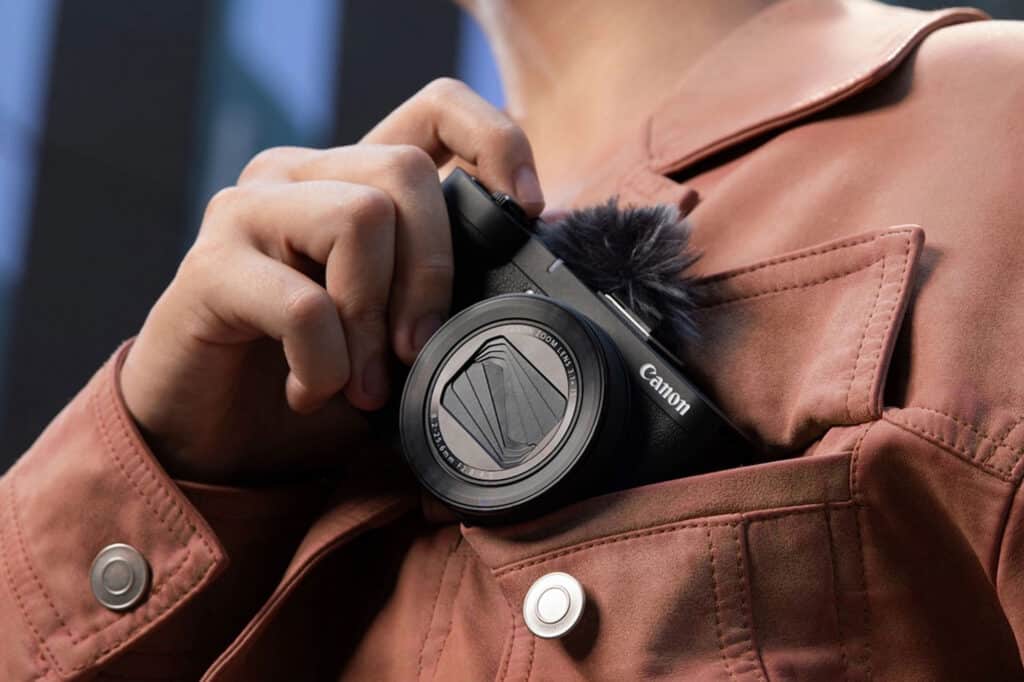
The Canon PowerShot V1 is a different kind of compact.
It’s unapologetically built around video.
Canon uses a relatively large 1.4-type sensor with a 16-50mm equivalent lens for stills and roughly 17-52mm equivalent framing for video. The lens starts at f/2.8, and Canon even built a 3-stop ND filter directly into the camera.
That ND filter matters.
If you’re shooting outdoors and want natural-looking motion blur or a wider aperture, you don’t have to start screwing filters onto the front of the camera.
It also includes optical and digital stabilization, a flip-out display, microphone and headphone connections and, unusually for a compact camera, an internal cooling fan that allows extended 4K recording.
This probably isn’t the first camera I’d recommend to someone primarily interested in still photography.
But for vloggers, travel creators and people shooting a lot of video who don’t want an interchangeable-lens camera, it makes a lot of sense.
Who is it for?
YouTube creators, travel videographers, small businesses and hybrid shooters who lean heavily toward video.
Sony RX100 VII: Still One of the Most Complete Pocket Cameras
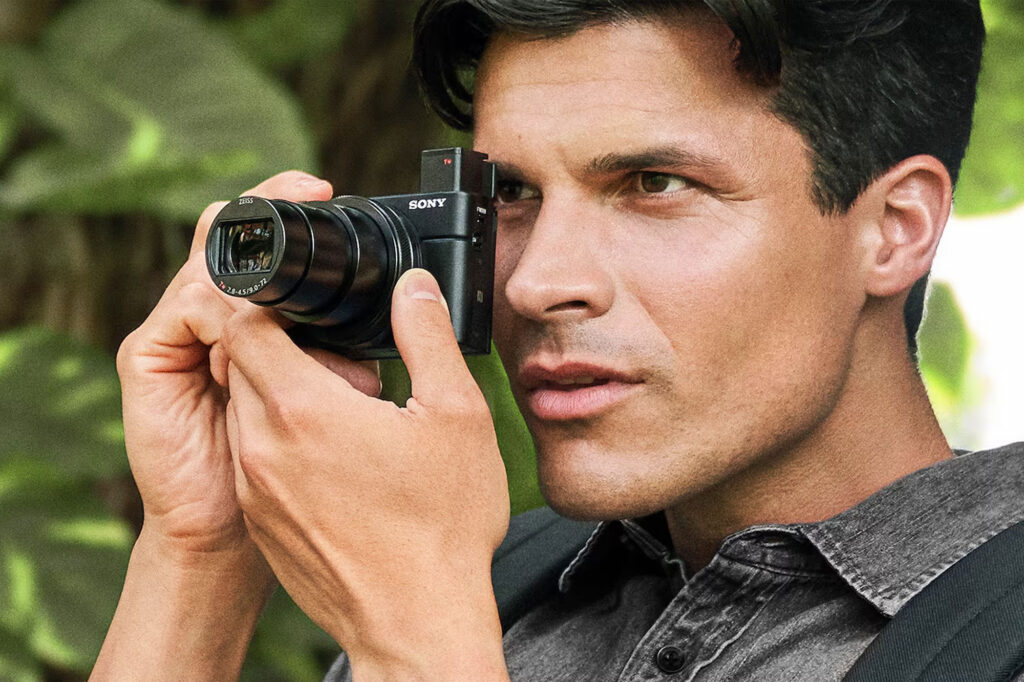
Another camera proving that new isn’t always better is the Sony RX100 VII.
Its biggest advantage is how much Sony managed to fit into a genuinely pocketable body.
You get a 20.1MP 1-inch sensor and a 24-200mm equivalent f/2.8-4.5 ZEISS lens in a camera weighing only about 302g. It also includes a pop-up electronic viewfinder, built-in flash, Real-time Tracking, Eye AF and a microphone input for video.
The 24-200mm range is especially useful.
You can photograph a wide city scene, shoot portraits and then zoom significantly farther than most phones without changing anything.
That’s why the RX100 VII continues to have such staying power.
Who is it for?
Travellers and photographers who want a premium pocket camera but aren’t willing to give up a useful zoom lens.
Panasonic LUMIX ZS99: When Zoom Matters Most
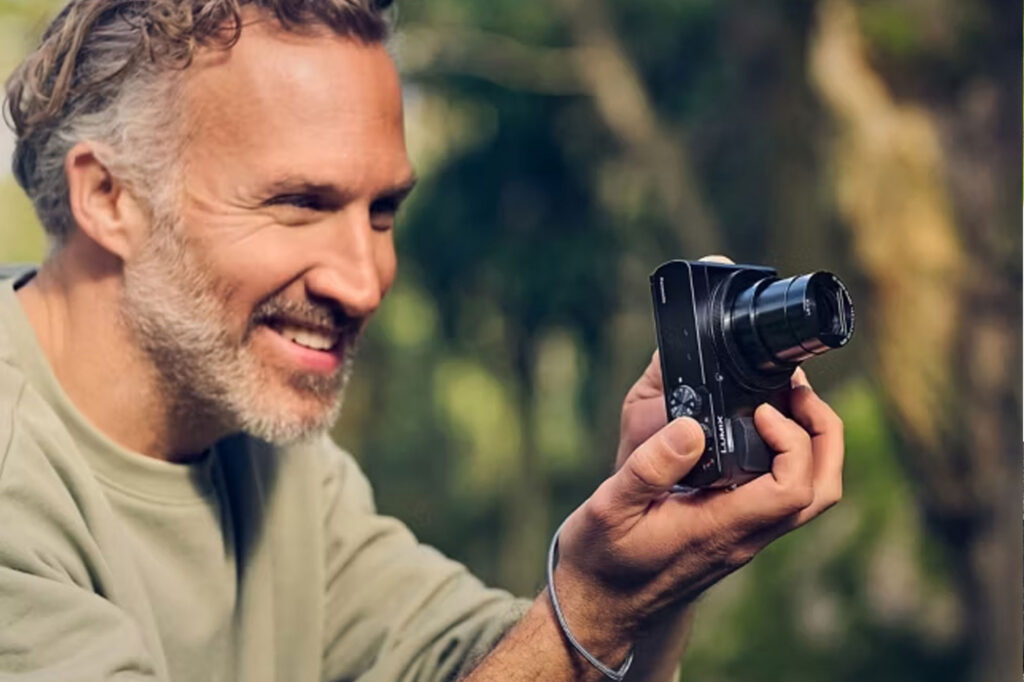
If your number-one priority is reach, don’t overlook the Panasonic ZS99.
Its 24-720mm equivalent LEICA lens offers a massive 30x optical zoom in a remarkably compact body. It also includes 5-axis hybrid stabilization, 4K video, 4K Photo, a tilting touchscreen and USB-C charging.
That makes it especially useful for travel.
Standing at the back of a concert?
Zoom in.
Wildlife on the far side of a field?
Zoom in.
Trying to photograph architectural details while exploring a city?
You guessed it.
The trade-off compared with something like the ZS300 is its smaller sensor, but you’re gaining substantially more reach.
Who is it for?
Travellers, families and anyone who wants the biggest practical zoom range in the smallest possible package.
Sony RX1R III: When “Compact” Doesn’t Mean Compromise
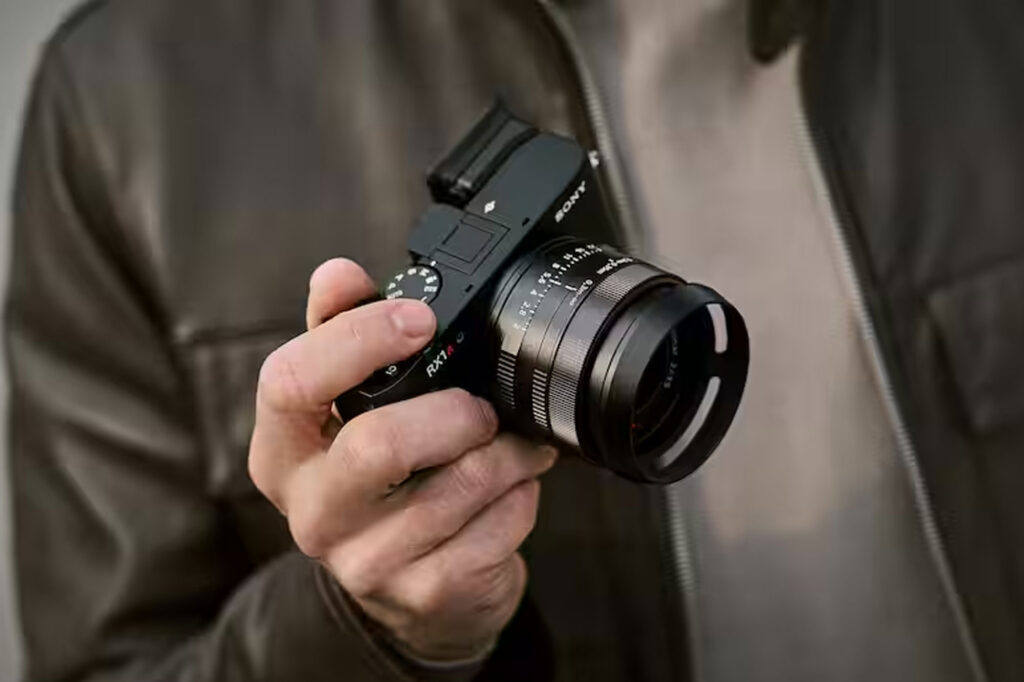
Then there’s the other end of the spectrum.
The Sony RX1R III takes a 61MP full-frame sensor and permanently pairs it with a ZEISS 35mm f/2 lens.
That’s an unusual combination.
Instead of building a compact camera around convenience and zoom range, Sony built one around image quality.
The high-resolution sensor also enables 35mm, 50mm and 70mm Step Crop modes, giving photographers three useful perspectives while still retaining substantial resolution. Sony also includes its latest autofocus processing and subject recognition technology.
It’s expensive.
It’s specialized.
And it’s absolutely not the point-and-shoot camera everyone needs.
But for a photographer who wants full-frame image quality in a remarkably small fixed-lens camera, there isn’t much else quite like it.
Who is it for?
Serious photographers who want one exceptional everyday camera and don’t need a zoom.
Quick Comparison: Which Compact Camera Fits You?
| Camera | Why You’d Buy It | Best For |
|---|---|---|
| Panasonic ZS300 | 1-inch sensor + 24-360mm zoom | Travel |
| Sony RX10 V | 24-600mm + advanced autofocus | Wildlife, sports, travel |
| Ricoh GR IV | APS-C quality in a tiny body | Street, everyday photography |
| Ricoh GR IV Monochrome | Dedicated black-and-white sensor | Fine-art and street photography |
| Canon G7 X III | Bright zoom, flash, creator-friendly design | Lifestyle and social creators |
| Canon PowerShot V1 | Video-first design with cooling and ND | Vlogging and video |
| Sony RX100 VII | 24-200mm in a true pocket camera | Premium travel |
| Panasonic ZS99 | Huge 30x optical zoom | Travel and family |
| Sony RX1R III | 61MP full-frame fixed-lens quality | Enthusiast and professional photography |
A Few Point-and-Shoot Tips

Compact cameras are easy to use, but that doesn’t mean you have to leave them in Auto mode forever.
Use the Zoom With Purpose
The biggest advantage many compact cameras have over phones is optical zoom.
Don’t simply stand in one spot and zoom until your subject fills the frame.
Try moving closer and shooting wide.
Then step back and zoom in.
You’ll quickly see how focal length changes the relationship between your subject and the background.
Learn Aperture Priority
If your compact camera offers manual controls, Aperture Priority is a great next step beyond Auto.
Choose a lower f-number when you want more background blur.
Choose a higher f-number when you want more of the scene in focus.
The camera can handle the rest while you’re learning.
Don’t Be Afraid of the Flash
Built-in flashes aren’t just for dark rooms.
That slightly direct, punchy flash look is back in style, and it can work incredibly well for portraits, nightlife, parties and travel photography.
Try using your flash outdoors or during golden hour too. A small amount of fill light can brighten faces without completely changing the atmosphere of the scene.
Shoot RAW When It Matters
JPEG is fantastic for easy sharing.
But if you’re photographing a beautiful sunset, an important trip or something you know you want to edit later, switch to RAW or RAW+JPEG.
You’ll have considerably more flexibility with exposure, highlights, shadows and colour afterward.
Carry It
This sounds obvious, but it’s really the entire point.
The advantage of a compact camera disappears if it stays at home.
Keep it in your backpack, jacket, purse or travel bag.
The more often it’s with you, the more often you’ll actually use it.
Accessories Worth Adding to Your Point-and-Shoot Kit
Part of the appeal of a compact camera is not needing much gear.
But a few accessories make a big difference.
Spare Battery
Small cameras usually mean small batteries.
A spare takes up almost no room and can save your day while travelling.
Fast Memory Card
If you’re shooting RAW bursts or 4K video, don’t cheap out on the memory card.
A reputable SD or microSD card from SanDisk, Lexar or another trusted manufacturer gives you better performance and, more importantly, confidence that your photos are actually being recorded.
Small Camera Pouch
One of the nice things about point-and-shoot cameras is that you don’t need a giant camera bag.
A small protective pouch keeps the screen and lens protected while still letting you throw the camera into another bag.
Wrist Strap
Probably the least exciting accessory on this list.
Also one of the most useful.
Compact cameras are small, and small cameras are easy to drop.
Use the strap.
Mini Tripod
A small tabletop tripod or JOBY GorillaPod can be incredibly useful for travel photos, family group shots, night photography and video.
It also takes up a fraction of the space of a traditional tripod.
Small Wireless Microphone
If your camera supports external audio and you’re shooting video, a compact wireless microphone from DJI or RØDE can make a much bigger improvement to your finished videos than most people expect.
Why Point-and-Shoot Cameras Make Sense Again
Smartphones are incredible cameras.
That hasn’t changed.
What’s changed is that compact cameras have stopped trying to simply imitate them.
A Panasonic ZS99 gives you a 720mm-equivalent optical reach.
A Ricoh GR IV gives you a large APS-C sensor in your pocket.
A Sony RX10 V covers everything from 24mm to 600mm.
A Canon G7 X III gives creators a bright zoom lens, real optical depth and built-in flash.
And a Sony RX1R III somehow puts a 61MP full-frame sensor behind a 35mm f/2 lens in a camera you can carry almost anywhere.
That’s why point-and-shoot cameras are interesting again.
They’re not trying to replace your phone.
They’re giving you something your phone can’t.
Whether that’s better image quality, enormous zoom range, a more intentional shooting experience or simply the feeling of carrying a real camera again, there has rarely been a better time to add a compact camera to your kit.
Explore More from Henry’s
- The Evolution of Point-and-Shoot Cameras: Embracing Instant Photography
- The Nikon Z6: A great mirrorless entry point for content creators
- The Right Camera for Family Vacations: Point & Shoot
- Back to School 2026: The Photography & Video Gear Students Actually Need

Canada’s Greatest Camera Store
Henry’s has long been known in the Canadian photographic industry as the source for the best and newest products, informed Imaging Experts, award-winning customer service and competitive pricing. Henry’s, competitive pricing since 1909 and has evolved into Canada’s largest independent photographic and digital retailer.