Most photographers find themselves in a similar position when moving to mirrorless. After years of building a kit around a DSLR system, the camera body may change, but the lenses — often trusted, familiar, and still capable — remain.
With modern mirrorless cameras offering significant advancements in autofocus, image quality, and video performance, the question becomes less about whether to upgrade, and more about how to adapt.
Should existing lenses be carried forward with an adapter, or is it time to invest in glass designed specifically for mirrorless systems?
Start with What You Have
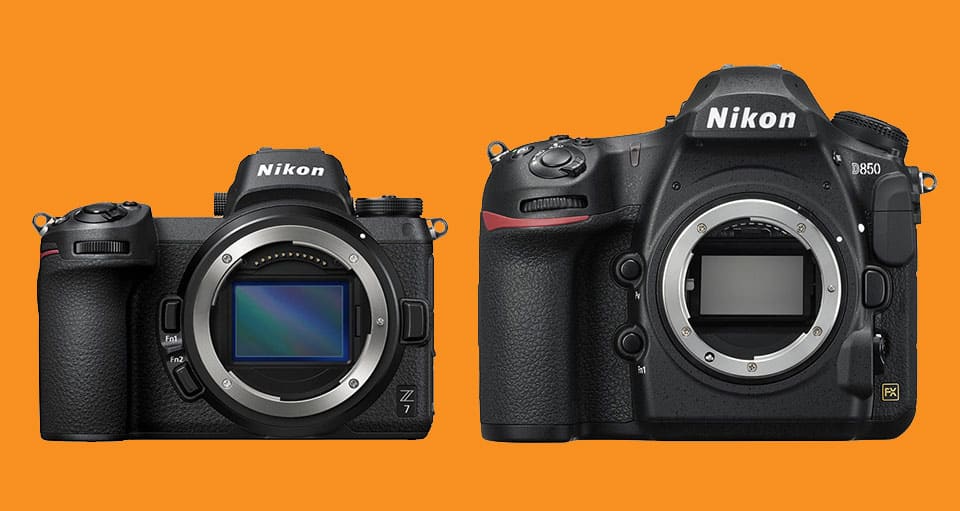
If you already own DSLR lenses, there is no immediate need to replace them.
Most major camera systems offer high-quality adapters that allow DSLR lenses to function on mirrorless bodies:
- Canon EF to RF
- Nikon F to Z
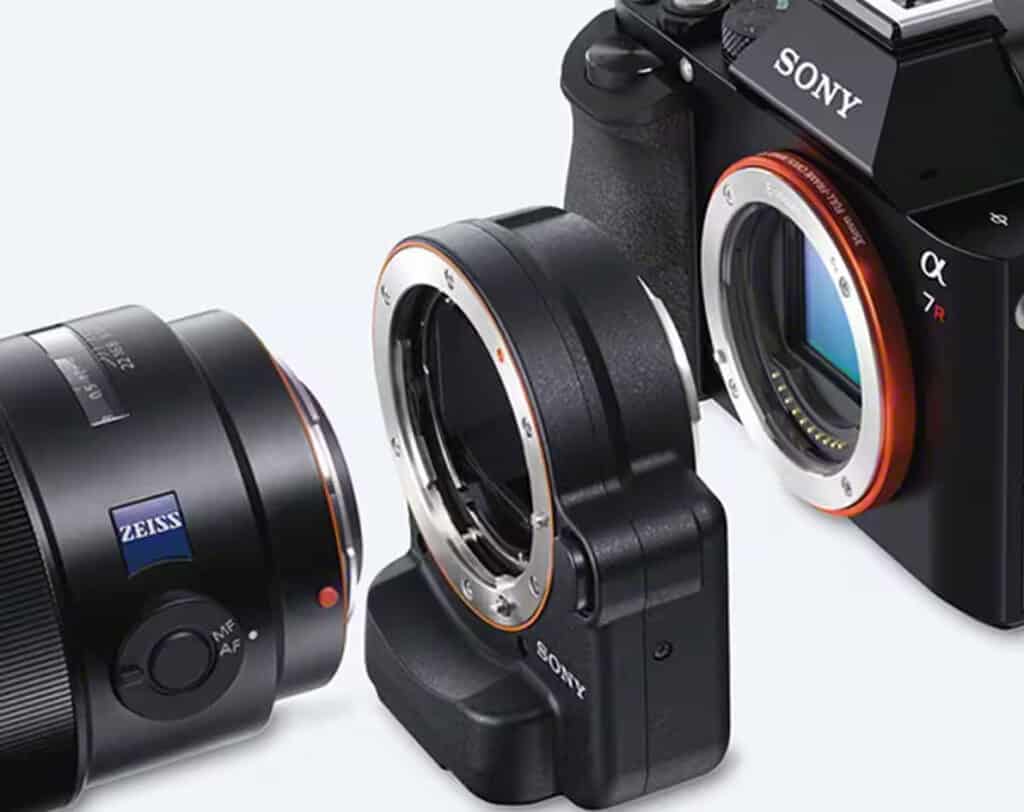
- Sony A to E
These adapters maintain compatibility with autofocus, aperture control, and image stabilization, making them a practical starting point.
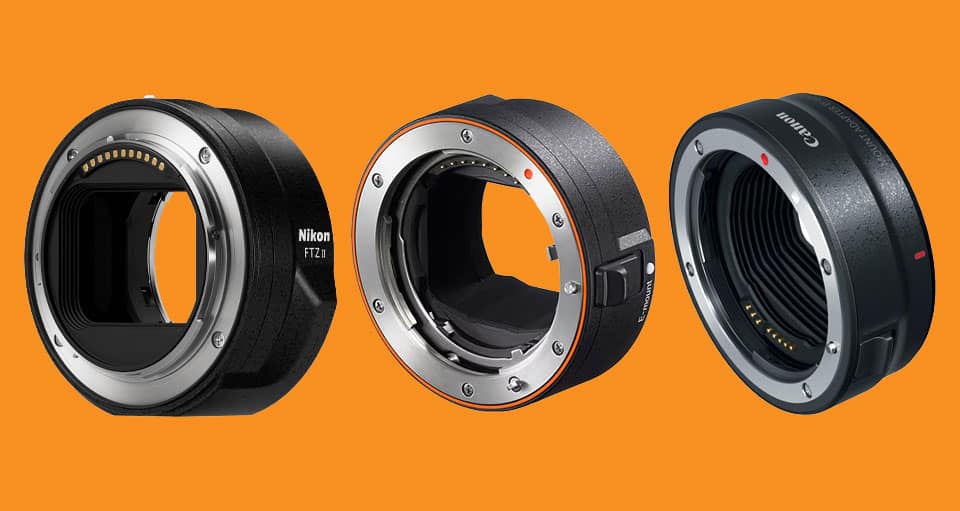
For many photographers, this approach provides continuity — allowing familiar lenses to be used while learning a new camera system.
Where Adapted Lenses Work Well
Adapted lenses are particularly effective for:
- Portrait photography
- Landscapes
- Studio work
- Controlled shooting environments
In these situations, speed and responsiveness are less critical, and image quality remains strong.
There is also a personal element. Many photographers have lenses they’ve used for years — lenses tied to specific projects, places, or moments. Keeping those lenses in rotation can be part of the transition.
Where Mirrorless Lenses Make a Difference
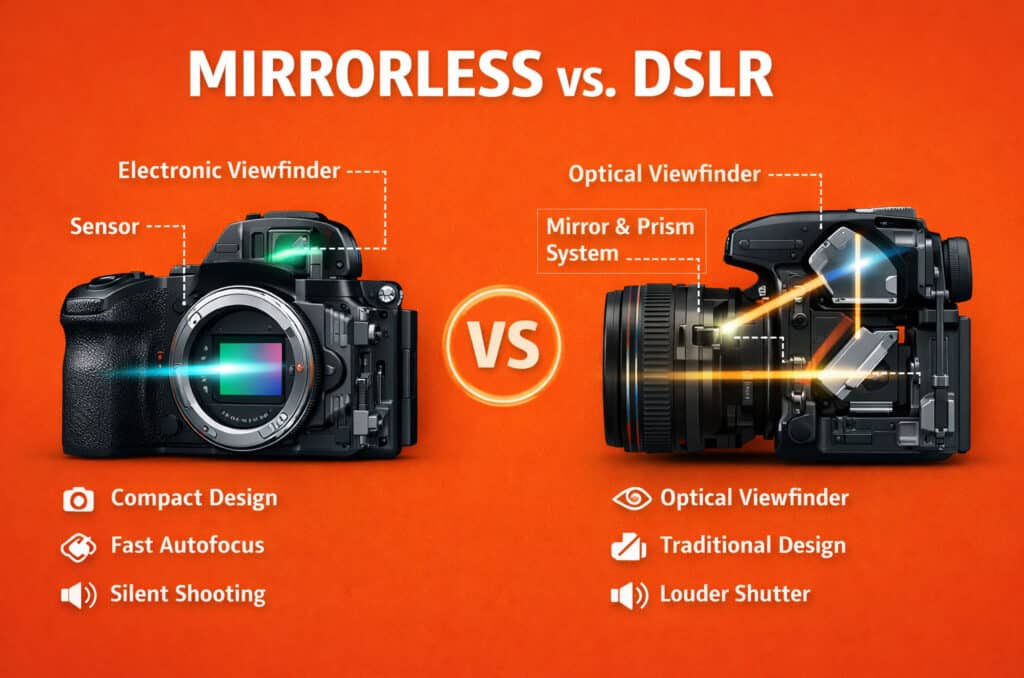
As capable as adapted lenses are, mirrorless-native lenses are designed to take full advantage of modern systems.
This becomes clear in areas where performance matters most:
Autofocus speed and accuracy
Mirrorless lenses are built to work with real-time eye tracking and subject detection, offering faster and more reliable focus.
Edge-to-edge image quality
New optical designs take advantage of shorter flange distances, resulting in improved sharpness and reduced distortion.
Size and balance
Mirrorless lenses are typically more compact and better balanced on smaller camera bodies.
Video performance
Quieter focus motors and smoother transitions are critical for video and hybrid shooting.
For Professionals and Hybrid Creators
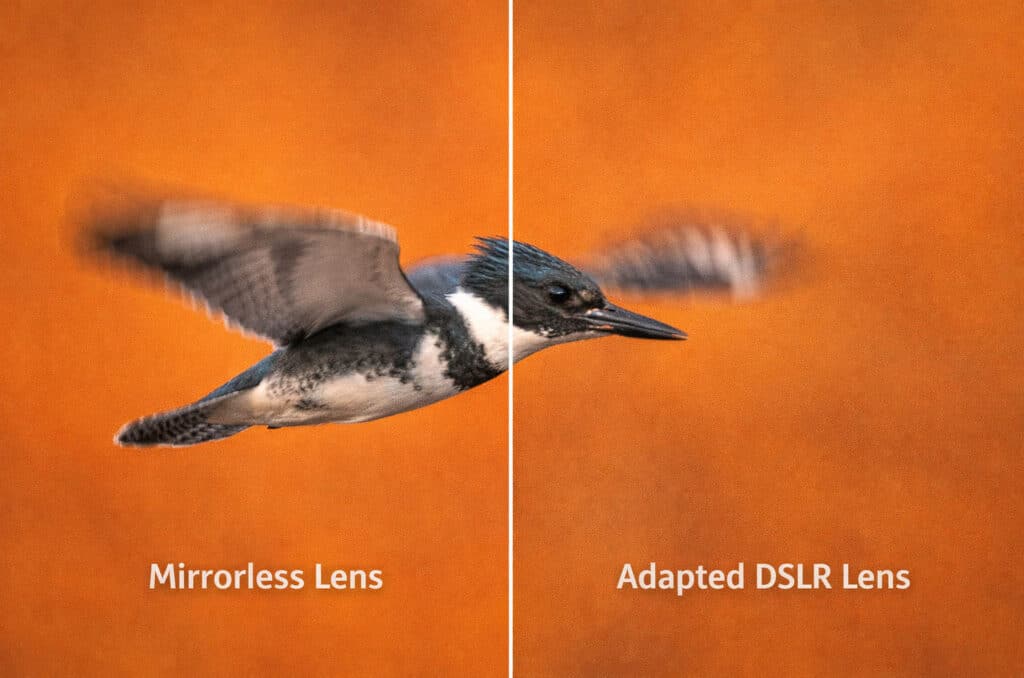
For photographers and creators working in fast-paced or professional environments, the benefits of modern lenses become even more apparent.
Adapted DSLR lenses can:
- Struggle with continuous autofocus tracking
- Produce audible focus noise during video
- Lag slightly in responsiveness
Mirrorless lenses, by contrast, are engineered for current workflows — whether that’s capturing action, shooting video, or producing content for social platforms.
Sigma: A Strong Bridge Between Systems
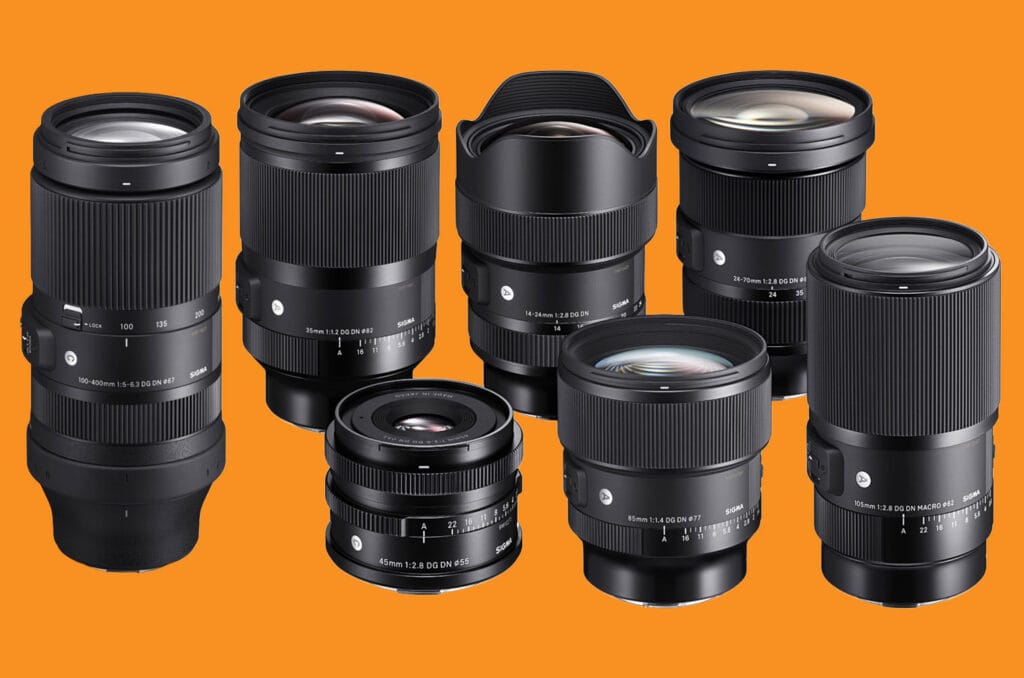
For photographers looking to expand into mirrorless lenses without committing to premium pricing across an entire system, Sigma offers a compelling option.
Sigma’s mirrorless lineup is known for:
- Excellent optical performance
- Fast apertures
- Compact, practical designs
- Strong value relative to OEM lenses
Recommended options:
- Sigma 18-50mm f/2.8 DC DN — a versatile standard zoom for APS-C systems
- Sigma 30mm f/1.4 DC DN — well-suited for everyday shooting and low light
- Sigma 56mm f/1.4 DC DN — a strong choice for portraits
Sigma lenses often serve as an effective entry point into mirrorless-native glass, offering modern performance without the highest-tier investment.
A Practical Upgrade Path
Transitioning to mirrorless does not need to happen all at once.
A practical approach:
- Continue using DSLR lenses with an adapter
- Identify limitations based on how you shoot
- Replace or supplement with mirrorless lenses where it matters most
For many, the first upgrade is a standard zoom lens, such as:
- 24–70mm
- 24–105mm
- 18–50mm (APS-C)
This provides immediate benefits in autofocus performance, image quality, and overall usability.
Balancing Familiarity with Performance

Moving to mirrorless is not just about new technology — it’s about evolving a system.
There is value in continuing to use lenses that are familiar and meaningful. At the same time, modern mirrorless lenses unlock the full potential of today’s cameras.
The goal is not to replace everything, but to build a kit that reflects how you shoot now.
Start Where You Are
Every photographer approaches this transition differently. Some gradually adapt their existing gear, while others move more quickly into a new system.
Both approaches are valid.
What matters is understanding where your current lenses fit — and where new ones can take you further.
Explore the latest mirrorless lenses and accessories at Henry’s:
https://www.henrys.com
Explore More
- SIGMA INTRODUCES LENSES FOR CANON RF MOUNT: WHAT YOU NEED TO KNOW
- Why Sony G Master Lenses Are Worth It: The 5 Essential Lenses Every Photographer Needs
- Exploring Sigma Lenses for Canon RF Mounts: A Game-Changer for Photographers
- Best Lenses For Bird Photography: A Complete Guide
- Exploring the Differences Between Canon Cameras: Mirrorless, DSLR, and Compact